

Recap:
We’ve been in this series on the Holy Spirit, and since Easter we’ve been praying every single Sunday, believing for God to move. Seven Sundays after Easter leads us to Pentecost, and we’re asking the Holy Spirit to move not just in church services, but in real life – in your family, your health, your relationships, your workplace, and the battles you carry every day. Because the God of the Bible is still the God you walk with today. The Holy Spirit is alive, active, and moving, and we want to see Him move in power.
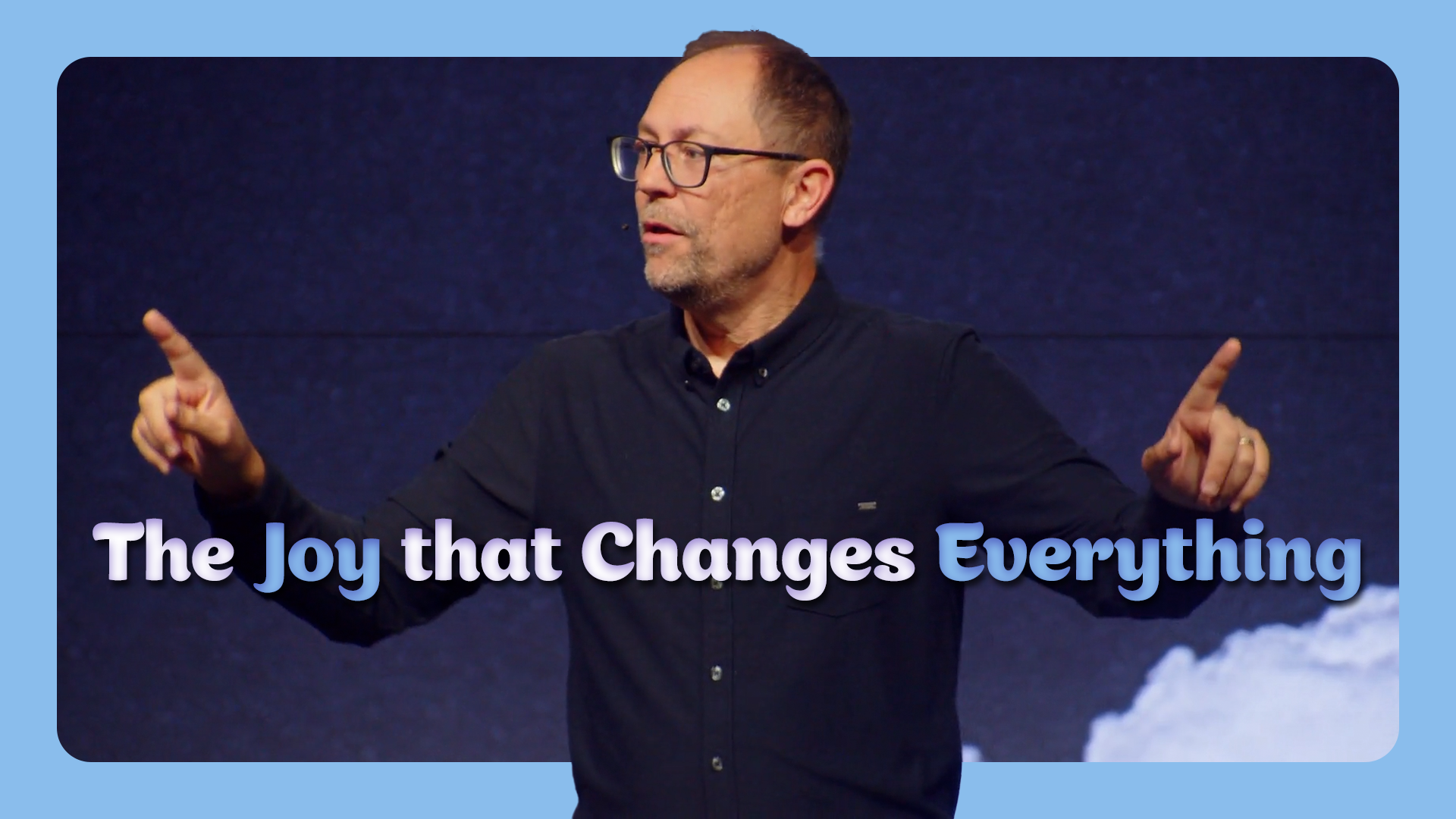
As I’ve been praying through this series, I kept coming back to this theme – the joy of the Holy Spirit. All throughout the New Testament there’s this connection between the Holy Spirit and joy. When the Spirit moves, joy follows. When people encounter the goodness of God, joy becomes the natural response. And not shallow happiness or emotional hype, but something deeper and spiritual – something anchored in who God is.
Paul writes in 2 Corinthians to a church filled with problems and pain, and he says something that stopped me in my tracks this week. He says, “It is God who makes both us and you stand firm in Christ.” God anoints us. He places His seal of ownership on us. He puts His Spirit in our hearts as a guarantee of what’s to come. But then Paul says this surprising line: “We work with you for your joy.”
That hit me deeply.
Paul is saying that joy matters so much that ministry itself is about helping people live in it. And honestly, that’s my heart too. I want people to leave church filled with joy – not fake smiles or surface-level positivity, but a deep, Spirit-formed joy that can hold them steady no matter what life throws at them.
Because biblical joy is not happiness on steroids. Happiness depends on happenings. If life goes well, we’re happy. If the bills are paid, if the kids clean their room, if things work out, we feel good. But joy is different. Joy is a fierce, unshakable anchor for your soul. Joy anchors you to who God is even when life around you feels unstable.
In the Greek language there’s this beautiful connection between several words. The word for grace is charis. The word for spiritual gift is charisma. And the word for joy is chara. Grace leads to gift, and gift leads to joy. We receive the free grace of Jesus, the Holy Spirit fills us and gives gifts, and the result is joy. That’s the flow of the Christian life.
And that joy is not a personality trait. It’s not reserved for naturally optimistic people. Some people wake up smiling at 5 a.m. and others need coffee and silence before speaking to another human being. That’s personality, not joy. Joy also isn’t emotional denial. It’s not pretending everything is okay when you’re falling apart inside.
Joy is the fruit of the Holy Spirit. It’s something only God can produce in you.
And honestly, one of the best ways I can describe joy is this: joy is defiant trust.
It’s the decision to trust God even when circumstances are difficult. It’s closing your eyes, remembering your sin, and then remembering Christ on the cross paying for that sin completely. It’s realizing your shame is gone as far as the east is from the west. And when that reality settles into your heart, joy rises up because you realize you are freely forgiven and deeply loved.
That changes how you see everything.
James says, “Consider it pure joy whenever you face trials of many kinds.” And if we’re not careful, that verse can sound like toxic positivity, like we’re supposed to pretend pain doesn’t exist. But that’s not what James means. He’s saying that joy becomes possible when we remember who God is in the middle of our trials.
Some of you right now are walking through real pain. Anxiety. Grief. Fear. Long-term struggles. And joy doesn’t mean you suddenly stop hurting. It means you choose, by faith, to focus on Christ in the middle of the storm.
Joy is an act of faith before it becomes an emotion.
We can’t always choose our emotions, but we can choose our focus. We can say, “God, I don’t feel You right now, but I trust that You’re with me.” And something begins to shift. Not always immediately in our circumstances, but inside of us. Because joy is not dependent on circumstances, joy changes circumstances. Not always by removing the pain, but by transforming the way we walk through it.
That’s what we see with Paul and Silas in prison. They were beaten, bloodied, chained, and locked in the deepest part of the dungeon. And they had no idea if breakthrough was coming. They didn’t know an earthquake was on the way. They didn’t know the chains would fall off. But before freedom came, they worshiped. Before the miracle came, they prayed. Joy came before the breakthrough. That’s powerful.
So many times we think joy comes after deliverance. “God, if You fix this, then I’ll rejoice.” But Paul and Silas worshiped before anything changed because their trust was rooted in Christ, not their circumstances.
And I know personally how hard that tension can be.
When our twin boys were born at 26 weeks, I remember the joy of seeing them enter the world and then, just days later, hearing a doctor tell me he didn’t think they would survive. I remember falling to the floor overwhelmed with fear and grief while friends sat in a waiting room praying for us. Then later hearing the doctor come back and say, “I think they’re going to make it.”
I didn’t know what to feel. Joy and sorrow existed together. Fear and faith lived side by side. But somewhere in the middle of that tension was this deep realization: no matter what happens, I’m going to trust God.
That’s what joy does. Joy flows from seeing Jesus.
When our eyes are fixed on Him, everything changes. And sometimes we’re too weak to lift our eyes on our own. That’s why we need people around us praying for us, encouraging us, and reminding us that God is still in control when we’re crumpled on the floor.
But when we see Jesus – truly see Him – joy begins to flood our hearts. Because we remember we are forgiven. We remember we are loved. We remember this world is not the end of the story. We remember that whether we live or die, we belong to Christ forever.
There’s an old song that says, “I’ve got something that the world can’t give, and the world can’t take it away.” And that’s exactly what the Holy Spirit places inside of every believer. The world cannot take away what God has placed within you.
If you belong to Jesus, you are filled with the Holy Spirit. And the result of His presence is deep, unshakable joy.
So my prayer is that this week you would see Jesus in fresh ways. That in the middle of your trials, your celebrations, your family dinners, your tears, your prayers, and your ordinary moments, you would encounter the goodness of God. Not just fleeting happiness, but a deep-seated joy that remains steady no matter what comes your way.
Because God has given you something the world cannot give – and the world cannot take it away.
Group Questions:
Icebreakers
- Are you naturally more of an optimist, realist, or “I need coffee first” person?
- What is something small that has brought you joy recently?
- What is a song that instantly lifts your mood?
Small Group Questions
- The sermon defined biblical joy as “a fierce, unshakable anchor for your soul.” How is that different from happiness?
- Read 2 Corinthians 1:21-24. What stands out to you about Paul saying, “We work with you for your joy”?
- The sermon connected grace, gifts, and joy – charis, charisma, and chara. How does remembering God’s grace help produce joy in your life?
- Why do you think joy is described as a fruit of the Spirit rather than something we create ourselves?
- The sermon said, “Joy is defiant trust.” What does that phrase mean to you?
- Read James 1:2-4. How can we “consider it joy” in trials without pretending pain isn’t real?
- In Acts 16, Paul and Silas worshiped before the breakthrough came. What does that teach us about joy?
- Have you ever experienced joy and grief at the same time? What helped you keep trusting God?
- The sermon said, “Joy flows from seeing Jesus.” What helps you fix your eyes on Jesus when life feels heavy?
- Who has helped you see Jesus when you didn’t have the strength to see Him on your own?
- What is one circumstance in your life where you need to choose joy as an act of faith this week?
- How can our group “work with each other for our joy” this week?
Closing Prayer Prompt
Ask the Holy Spirit to help each person see Jesus in fresh ways this week and receive a joy that the world can’t give and the world can’t take away.