

Recap:
Last year, Heather and I were on our way to dinner with a couple from church when my phone rang. My sister had been rushed to the ER. One moment we had plans… the next, everything changed. We got to the hospital and found out she had overdosed and was on life support. A few days later, she died.
Death is a cruel enemy. And when she passed, a flood of emotion hit me all at once – regret, pain, emptiness, anger. I didn’t even have words for it. Many of you know exactly what that feels like. You have your own stories of how death interrupted your life, robbed you of dreams, and took someone you loved. Death isn’t poetic. It’s not a Hallmark moment. It’s an enemy.
And Psalm 23 does not hide that. “Even though I walk through the valley of the shadow of death…” David doesn’t skip the valley. He names it. And every one of us will walk through it, either because we’ve lost someone, or we’re walking with someone who has. Death comes for all of us.
Jesus faced death, too, not just His own, but the death of His friend Lazarus. By the time He got to the town, Lazarus was gone. And when Mary came to Him and fell at His feet weeping, scripture says Jesus was “deeply moved” and “greatly troubled.” And then it says, “Jesus wept.”
He didn’t scold Mary. He didn’t say, “Have more faith.” He didn’t rush past the pain to get to the miracle. He stood in it. He shed quiet tears. Silent tears. Tears over death’s brutality, over the grief Mary and Martha were carrying, over what sin and death have done to humanity.
And thank God we have a Savior who knows how to weep with us.
The Bible is full of lament. Nearly half the Psalms are lament. Psalm 56 says God collects our tears in a bottle. Psalm 34 says He is close to the brokenhearted. Jesus Himself said, “Blessed”, happy, “are those who mourn.” There is a holy permission in Scripture to feel the pain before we rush to the resurrection.
And in that place, in the valley, God does something shocking:
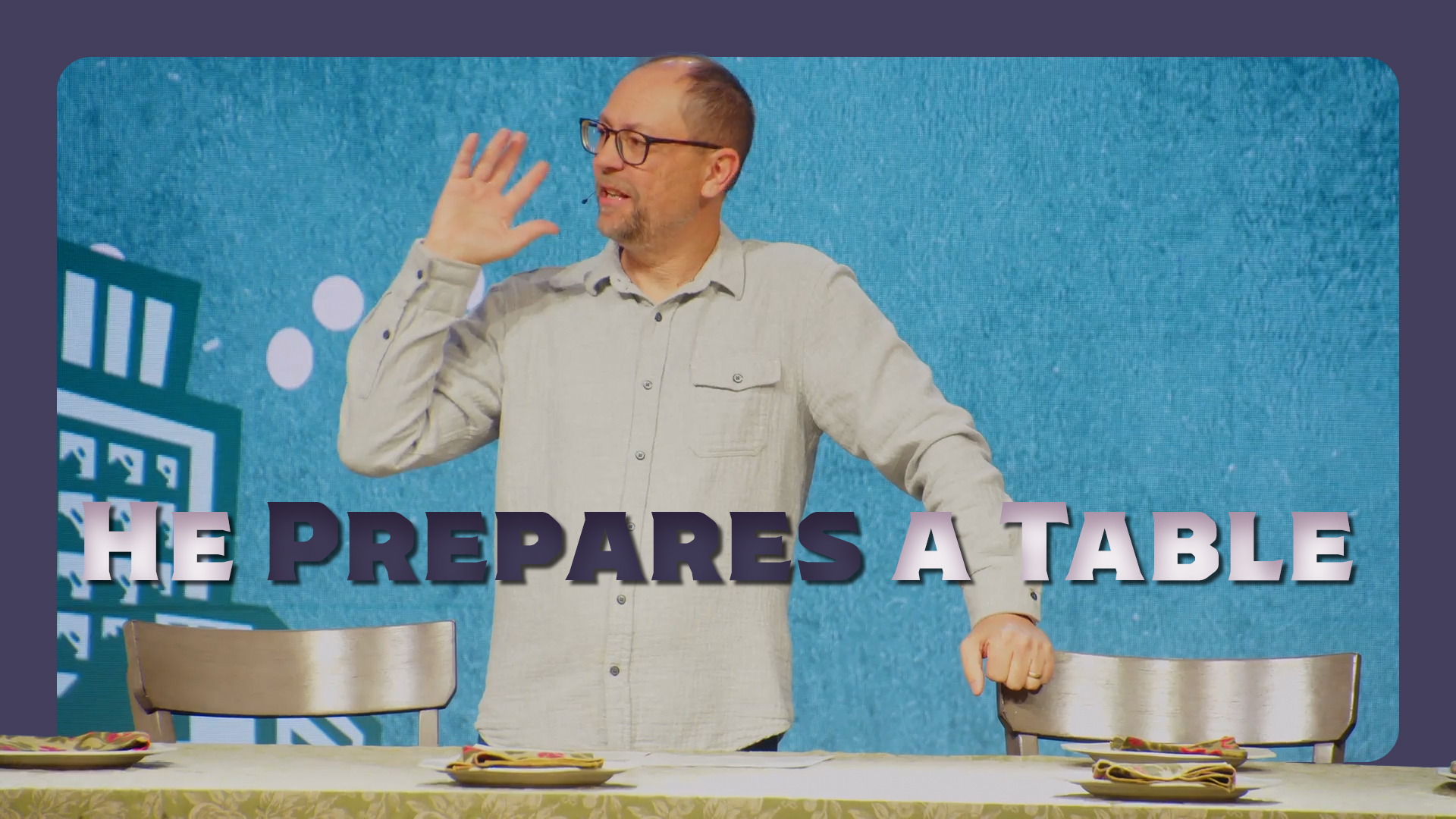
He prepares a table.
Right in the presence of our enemies.
Right in the presence of death.
This isn’t just a table of food. In the ancient world, a table was a covenant table, God saying, “I’m with you. I’m for you. I’m committing Myself to you right where you are.” It’s God sitting with us in the grief, not pulling us out of it immediately.
And at the tomb of Lazarus, you see both sides of Jesus:
– quiet tears…
– and righteous fury.
The Greek word for “troubled” carries the image of a war horse snorting before battle. Jesus is angry, not at us, not at Mary and Martha, but at death itself. At the enemy of our souls. At the power that tries to tear us from life.
So He steps into the fight. He rages against the grave. He commands, “Roll the stone away.”
And then He reveals who He really is:
“I am the resurrection and the life.”
That’s what Christmas is about, God coming into our broken world to conquer the one enemy we could never defeat.
And for those of us sitting at tables this Christmas with an empty chair… this table is not just a reminder of who’s gone. It is a reminder of Who is here. Emmanuel. God with us. Not pulling us out of the pain, but filling it with His presence.
Henry Nouwen said, “God did not come to take away our suffering, but to fill it with His presence.”
That’s Christmas.
And when Christmas feels heavy, it’s okay to feel everything. It’s okay to decline an invitation, to simplify, to find moments of solitude, but not isolation. It’s okay to remember, to cry, to light a candle, to join a grief group, to sit honestly with the ache. We grieve because we have loved deeply.
But lament also looks forward. “My cup overflows.” “Surely goodness and mercy will follow me.” Isaiah says God will swallow up death forever. Revelation says He will wipe every tear from our eyes.
We live in the tension:
grief on one side…
hope on the other.
And God sits with us in the middle.
At the end of this message, I invited people to bow their heads, and I prayed that Emmanuel would meet those who feel lonely this Christmas, that He would weep with them, sit with them, hold them, comfort them.
And then I gave an invitation:
If you’ve never received the resurrection and the life into your own soul, Jesus is here. He fought the battle you couldn’t win. He died the death you couldn’t die. And He rose so you could rise too.
And today, some lifted their hands, saying, “I need Jesus.”
We prayed together, confessing faith in Christ, receiving forgiveness, receiving new life.
Because this is the hope of the table.
This is the hope of Christmas.
This is the hope of every believer:
He prepares a table for us in the presence of our enemies.
Even death.
And He is with us.
And He will wipe every tear from our eyes.
Amen.
Group Questions:
Icebreakers
- If you could sit at any table in history for one meal, which one would you choose and why?
- What’s one Christmas tradition, big or small, that brings you comfort?
- When life takes an unexpected turn, do you tend to freeze, fix, or power through? Share a story that feels safe.
Discussion Questions
Naming the Valley
“Even though I walk through the valley of the shadow of death…”
- Why do you think Scripture refuses to skip the valley, why does God name the darkness instead of avoiding it?
- Has there been a moment in your life when “everything changed in a phone call”? What did you feel in that moment?
- David described grief as a flood of emotions that didn’t fit neatly into words.
- How have you experienced that kind of emotional “tangle”?
Jesus Weeps With Us
“Jesus wept.”
- What stands out to you about the fact that Jesus didn’t rush to fix Mary and Martha’s pain?
- Why is it significant that Jesus shows both quiet tears and righteous fury at the tomb of Lazarus?
- How does knowing that Jesus grieves with us change the way we process loss?
The Table in the Valley
“He prepares a table before me in the presence of my enemies.”
- What does it mean to you that God sets a table in the valley, not after it?
- In the ancient world a table was a covenant table. What does God’s covenant presence mean in seasons of grief?
- This Christmas, is there an “empty chair” you carry? What emotions surface when you think about that?
- How can we honor grief without becoming isolated from others?
Living in the Tension
“Grief on one side… hope on the other… and God sits with us in the middle.”
- Which side of the tension do you feel more strongly right now, grief or hope?
- Why do you think Scripture gives us permission to lament instead of bypassing pain?
- How has God met you “in the middle” of grief in the past?
- What does Henry Nouwen’s quote stir in you:
“God did not come to take away our suffering but to fill it with His presence.”
The Hope of Resurrection
“I am the resurrection and the life.”
- How does Jesus’ confrontation with death at Lazarus’ tomb strengthen your understanding of Christmas?
- What does the promise of resurrection mean to you personally?
- Was there a moment in the sermon when the hope of the gospel became particularly clear or moving for you?
Application & Prayer
- What is one practical way you can create space for lament this Christmas?
- What is one practical way you can choose hope this Christmas?
- Who is one person you could reach out to who might be grieving, lonely, or hurting?